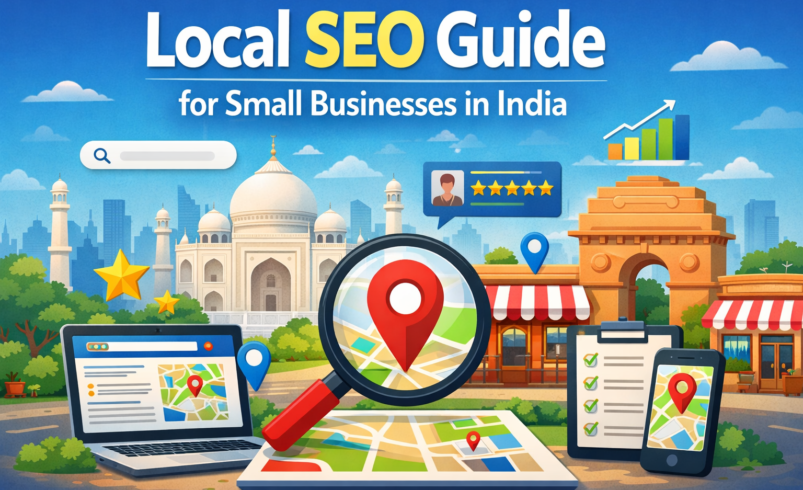
Local SEO Guide for Small Businesses in India
In an increasingly digital marketplace, visibility in local search results has become a decisive factor for small business success. Consumers now rely heavily on search engines to discover nearby services, compare options, and make informed decisions. This shift has made it essential for businesses to understand how search engines interpret local intent and how they can align their online presence accordingly. This guide explains the principles, processes, and best practices of local search optimization in the Indian context.
Understanding Local Search Behavior in India
India’s digital ecosystem is unique due to its linguistic diversity, mobile-first internet usage, and rapidly expanding tier-2 and tier-3 city markets. Most users search with geographic intent, such as “near me,” city names, or locality references. Search engines interpret these signals to deliver region-specific results.
This is where Local SEO becomes critical. It focuses on optimizing a business’s digital footprint so that it appears prominently when users search for services within a specific geographic area. Unlike general search optimization, local optimization prioritizes proximity, relevance, and prominence.
How Search Engines Rank Local Results
Search engines evaluate local listings based on three core pillars:
1. Relevance
How closely the business matches the user’s query.
2. Distance
How near the business is to the searcher’s location or specified area.
3. Prominence
How well-known and authoritative the business appears online.
Optimizing these elements improves the chances of ranking in map listings, local packs, and localized organic results.
The Role of Business Profiles
One of the most influential elements in local ranking is the business profile on search platforms, particularly Google mu business (often referred to as the business profile system for Google search and maps).
A properly optimized profile ensures that search engines understand:
- What the business offers
- Where it is located
- When it operates
- How customers can contact it
Accurate business details significantly increase trust signals and help avoid inconsistencies that can negatively affect rankings.
Key components of an optimized profile include:
- Correct business name, address, and phone number
- Primary and secondary categories
- Business description aligned with services
- Updated hours and attributes
- High-quality images
Website Optimization for Local Visibility
Your website remains the central asset for search visibility. For effective SEO at a local level, certain elements must be aligned with geographic relevance.
On-Page Local Signals
Local signals tell search engines that your website serves a specific area. These include:
- City or locality names in page titles and headings
- Address and contact details on every page (usually in footer)
- Location-specific landing pages when operating in multiple areas
- Embedded maps for physical locations
Structured data markup (schema) further enhances local understanding by helping search engines interpret business information in a standardized format.
Content Strategy for Local Relevance
Content is not only a ranking factor but also a trust-building mechanism. Locally relevant content demonstrates expertise in a specific area and increases engagement.
Effective local content includes:
- City-specific service guides
- Area-based FAQs
- Local news or updates related to your industry
- Community involvement or event participation
This approach strengthens topical authority and improves visibility for location-based searches while remaining helpful and informative.
Reviews and Reputation Signals
Customer reviews are both a ranking factor and a conversion driver. Search engines interpret consistent, authentic reviews as signals of trust and quality.
Key principles include:
- Encouraging customers to leave honest feedback
- Responding professionally to both positive and negative reviews
- Avoiding artificial or incentivized reviews
- Maintaining review consistency across platforms
Review signals reinforce the credibility of Local SEO efforts and support long-term ranking stability.
Citations and Local Listings
Citations are mentions of your business name, address, and phone number on other websites such as directories, industry portals, and local listing platforms.
Consistency is critical. Even small variations in spelling, formatting, or phone numbers can confuse search engines and dilute authority.
Common citation sources in India include:
- Business directories
- Chamber of commerce websites
- Industry-specific portals
- Regional listing platforms
High-quality citations strengthen geographic relevance and improve prominence in local results.
Measuring Local Performance
Tracking performance ensures that optimization efforts align with business goals. Important metrics include:
- Search impressions and clicks from local queries
- Map listing visibility
- Direction requests and phone calls
- Website visits from location-based searches
These indicators show how effectively a business is connecting with its local audience.
Conclusion
Local search optimization is no longer optional for small businesses operating in competitive and digitally active markets like India. By aligning business profiles, websites, content, reviews, and citations with geographic intent, organizations can significantly improve their discoverability and credibility.
A structured Local SEO strategy grounded in relevance, accuracy, and user value enables businesses to connect with nearby customers at the exact moment of need. When supported by sound technical foundations and consistent information management, local optimization becomes a sustainable driver of visibility, trust, and long-term growth within regional markets.